
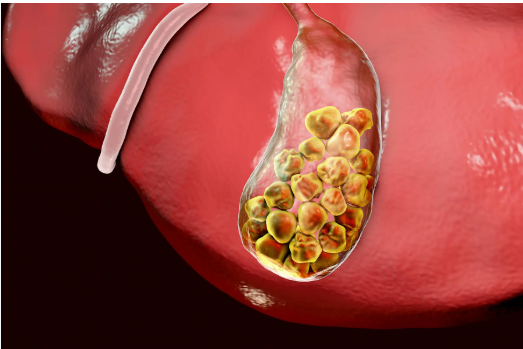
1. A Common Diagnosis, A Deeper Story.
Few conditions bring as many patients into a surgeon’s clinic as gallbladder stones. An ultrasound report showing “cholelithiasis” is one of the most frequently encountered findings in routine health checkups today, and most patients, and often their treating doctors, approach it as an isolated, mechanical problem: stones form, they may or may not cause pain, and if symptomatic, the gallbladder is removed. Case closed.
But after years of operating on thousands of gallbladders, I have come to see this condition differently. Gallstones are rarely an isolated event. In the vast majority of cases I encounter, particularly in urban Indian patients, gallstone disease is simply the visible tip of a much larger, submerged iceberg: metabolic syndrome.
2. What Is Actually Happening Inside the Body.
Cholesterol gallstones, the most common type by far, form when bile becomes supersaturated with cholesterol relative to the bile salts and lecithin available to keep it dissolved. This imbalance does not occur in isolation. It is driven by the same underlying processes that cause insulin resistance, central obesity, high triglycerides, and abnormal glucose handling, the core features of metabolic syndrome.
In simple terms, the liver, responding to excess insulin and disturbed lipid metabolism, pumps out more cholesterol into bile than the system can handle. The gallbladder, meanwhile, often becomes sluggish in patients with insulin resistance, emptying less efficiently and allowing that supersaturated bile to sit and crystallise. The stone is the end result of a metabolic process, not the starting point.
3. Why This Distinction Matters.
This is not merely an academic point. It has real clinical consequences. When a patient presents with gallstones, the correct question is not only “does this need surgery?” but “what is this telling me about this patient’s overall metabolic health?”
In my practice, when I see gallstones in a patient, especially one who is overweight, has central abdominal obesity, or has any degree of deranged blood sugar or lipid profile, I treat it as a signal to screen more broadly. These patients frequently, on closer evaluation, turn out to also have:
- Non-alcoholic fatty liver disease (now termed MASLD).
- Insulin resistance or undiagnosed prediabetes/diabetes.
- Dyslipidemia, particularly elevated triglycerides.
- Increased visceral fat, even in patients who appear only mildly overweight on the scale.
Removing the gallbladder addresses the immediate surgical problem. It does nothing to address the metabolic environment that produced the stones in the first place, and that same environment continues to silently drive risk for fatty liver progression, cardiovascular disease, and type 2 diabetes long after the gallbladder is gone.
4. The Delhi and Urban India Context.
In our cities, this pattern has become strikingly common. Sedentary occupations, calorie-dense diets, and rising rates of abdominal obesity mean we are now diagnosing gallstones in patients far younger than a generation ago, many in their late twenties and thirties. What used to be considered a disease of older, overweight women has become a much broader metabolic marker affecting men and women across age groups.
5. Why a Metabolic Surgeon’s Perspective Matters.
This is precisely where the perspective of a metabolic surgeon differs from a purely mechanical, “remove the stone” approach. As specialists who manage both hernia and bariatric/metabolic disease, we are trained to look past the presenting complaint and evaluate the patient as a whole metabolic system. For a patient with significant obesity and gallstones together with other features of metabolic syndrome, a conversation about weight, insulin resistance, and, where appropriate, bariatric or metabolic surgical options can be far more impactful for long term health than gallbladder removal alone.
Interestingly, patients undergoing bariatric surgery are themselves at a transient increased risk of developing new gallstones during rapid weight loss, which is precisely why any comprehensive metabolic surgical program must include gallbladder assessment and, when appropriate, preventive strategies as part of the perioperative plan.
6. The Bigger Picture.
Gallbladder stones should never be viewed as a standalone, unlucky finding. They are frequently the first visible clue, the tip of the iceberg, pointing toward a much larger metabolic disturbance sitting beneath the surface. Treating the stone without investigating the metabolic soil it grew from is a missed opportunity for genuine, long term preventive care.
If you or a family member has recently been diagnosed with gallstones, it is worth using that moment not just to plan surgery, but to ask a broader question: what is my liver, my blood sugar, and my overall metabolic health telling me right now?
This article is intended for general health awareness and does not replace individual medical consultation. Please speak with your doctor regarding your personal risk factors and treatment options