
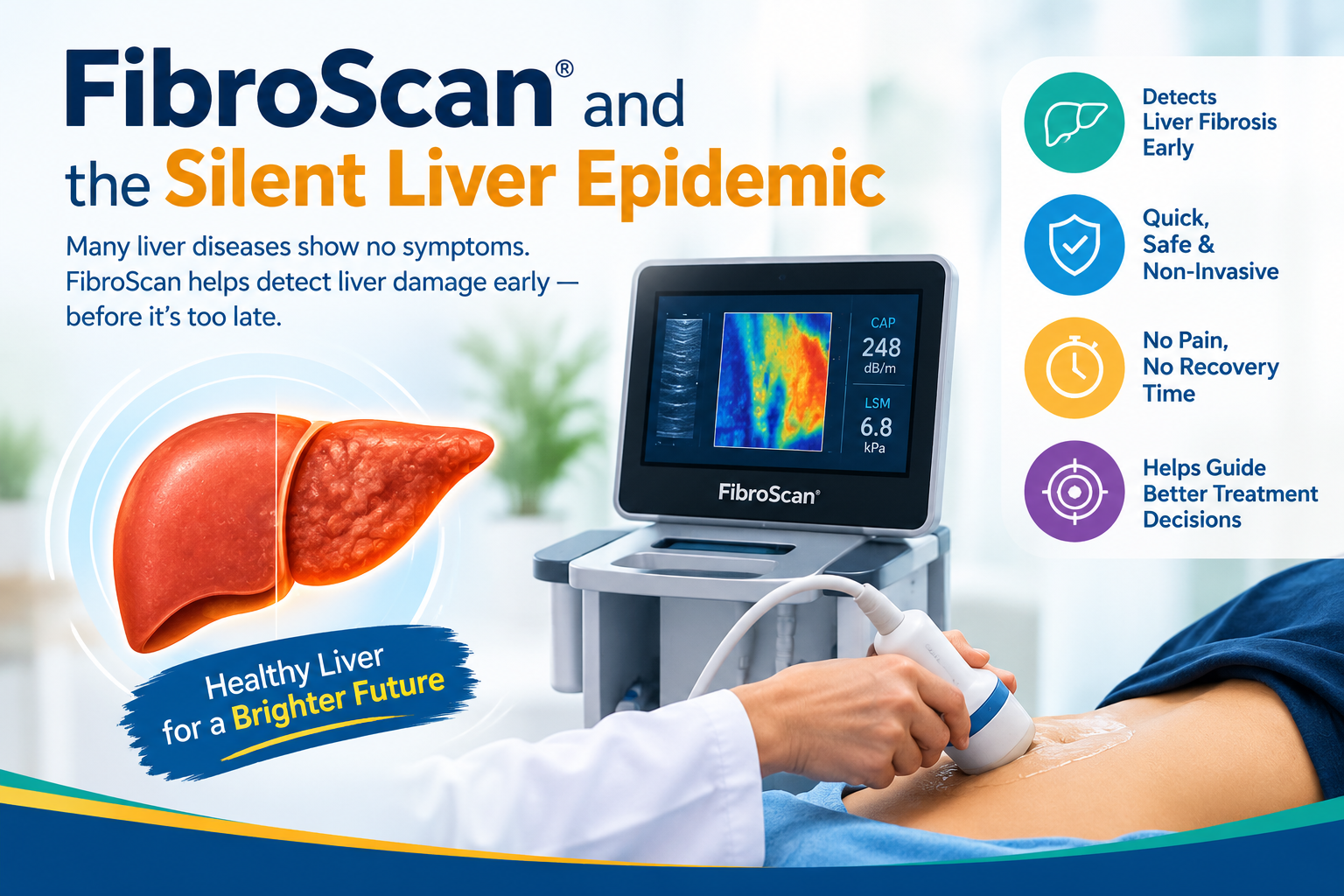
1. The Organ That Never Complains
In over a decade of clinical practice, I have come to think of the liver as the most patient organ in the human body. It absorbs metabolic insult after metabolic insult, from fried street food to festival sweets, from sedentary desk jobs to disturbed sleep, and rarely protests. There is no chest pain to alert you, no breathlessness to send you rushing to a doctor. By the time the liver finally does complain, through jaundice, swelling, fatigue, or an abnormal scan picked up incidentally, a decade or more of silent damage has often already occurred.
This is precisely why I now tell my patients in Delhi, with growing urgency, that liver screening should not wait for symptoms. And this is where FibroScan has become, in my opinion, one of the most important preventive health tools available to the modern Indian patient.
2. Why Delhi in Particular?
Delhi’s disease burden has a particular flavour. High calorie, carbohydrate and fat dense diets, long commutes and sedentary work culture, rising rates of diabetes and central obesity, and significant air pollution exposure all converge on the liver as much as they do on the heart and lungs. Non-alcoholic fatty liver disease (NAFLD), now often relabelled metabolic dysfunction-associated steatotic liver disease (MASLD), is no longer a disease of the elderly or the heavy drinker. I routinely see it in software professionals in their early thirties, in homemakers with no history of alcohol use, and even in overweight teenagers brought in by anxious parents.
The liver, in this sense, is often the first organ to register metabolic imbalance, before it shows up as deranged cholesterol, before it shows up as blood pressure, and long before it shows up as a cardiac event.
3. What Exactly Does FibroScan Measure?
FibroScan is a non-invasive ultrasound-based device that measures two things in a single five-minute test, without needles, without sedation, and without a single day of downtime:
- Controlled Attenuation Parameter (CAP): an estimate of fat content within the liver .
- Liver stiffness (elastography): an estimate of fibrosis, or scarring, within the liver tissue For decades, this kind of information could only be obtained through a liver biopsy, an invasive procedure involving a needle passed into the liver, carrying real (if small) risks of bleeding and pain, and requiring hospital observation. FibroScan has effectively replaced biopsy for the vast majority of screening and monitoring purposes. It converts what was once a reactive, uncomfortable diagnostic step into a proactive, painless five-minute consultation.
4. The Ten-Year Head Start
The single most important point I make to my patients is this: liver fat and early fibrosis, when caught on a FibroScan, are often reversible. Diet correction, weight reduction of even five to ten percent, regular physical activity, and control of blood sugar can meaningfully improve or normalise liver stiffness scores within months.
But this window closes with time. Untreated fatty liver can progress silently to steatohepatitis, then to fibrosis, and in a subset of patients, eventually to cirrhosis, a stage where damage is largely irreversible. A FibroScan done today can identify a problem roughly a decade before it would otherwise surface as symptomatic liver disease, cardiovascular event, or metabolic syndrome complication. That decade is the difference between a lifestyle prescription and a hospital admission.
5. Why This Belongs in Routine Preventive Health Checkups
We have normalised annual blood sugar tests, annual lipid profiles, and annual ECGs as part of preventive health in India. I would argue FibroScan deserves the same standing, particularly for:
- Anyone with a BMI above 25, or central/abdominal obesity .
- Anyone with type 2 diabetes or pre-diabetes.
- Anyone with a family history of fatty liver, diabetes, or early cardiovascular disease.
- Anyone with deranged lipid profiles, even mildly.
- Anyone who consumes alcohol regularly, even socially.
- Anyone over 35 living the typical high-stress, low-activity Delhi lifestyle.
5. A Test, Not a Verdict
I want to end on a note of reassurance rather than alarm. A FibroScan result is not a diagnosis of disease, it is a data point, much like a blood pressure reading. Most patients who come in for this test leave with either genuine reassurance or, more valuably, an early, actionable, and reversible finding paired with a clear plan: dietary correction, a nutritionist’s guidance, and a structured follow-up.
In my view, this is what preventive medicine should look like: quiet, painless, and years ahead of the problem it is trying to prevent